
Explaining the (in-)explainable addition of the words “Another Characteristic” in the new EU trademark law

Dennemeyer Group

Though the EUIPO did not disclose the number of fraudulent requests nor how many legitimate representatives were affected, the threat was serious enough to warrant immediate restorative- and countermeasures. Those stated to have been implemented are enhanced IP-address filtering and blocking, strengthened verification processes and the reinstatement of rightful representatives: "All fraudulent requests have been identified and the majority already reversed. Representatives may also submit requests to reinstate their positions proactively."
Smaller enterprises without their own in-house legal teams are more vulnerable to frauds of this nature, as are overburdened legal firms that might not cross-reference a procedural notice of replacement from the EUIPO against client communications. The increasing legal sophistication seen in the stratagems used by criminals speaks to the danger of complacency from any corner of the IP sector. As swindles evolve, no doubt eyeing artificial intelligence (AI) as a potential enabler, all participants in the IP system will face a rising need to stay alert and responsive.
An equal degree of vigilance is not usually necessary when planning a visit to Sweden as the likelihood of ending up a continent away from one's intended destination is rather low. Yet it is that very (remote) eventuality that has seemingly inspired the nation's tourist board to take the unprecedented "and slightly cheeky" step of filing a European Union trademark application for its name.
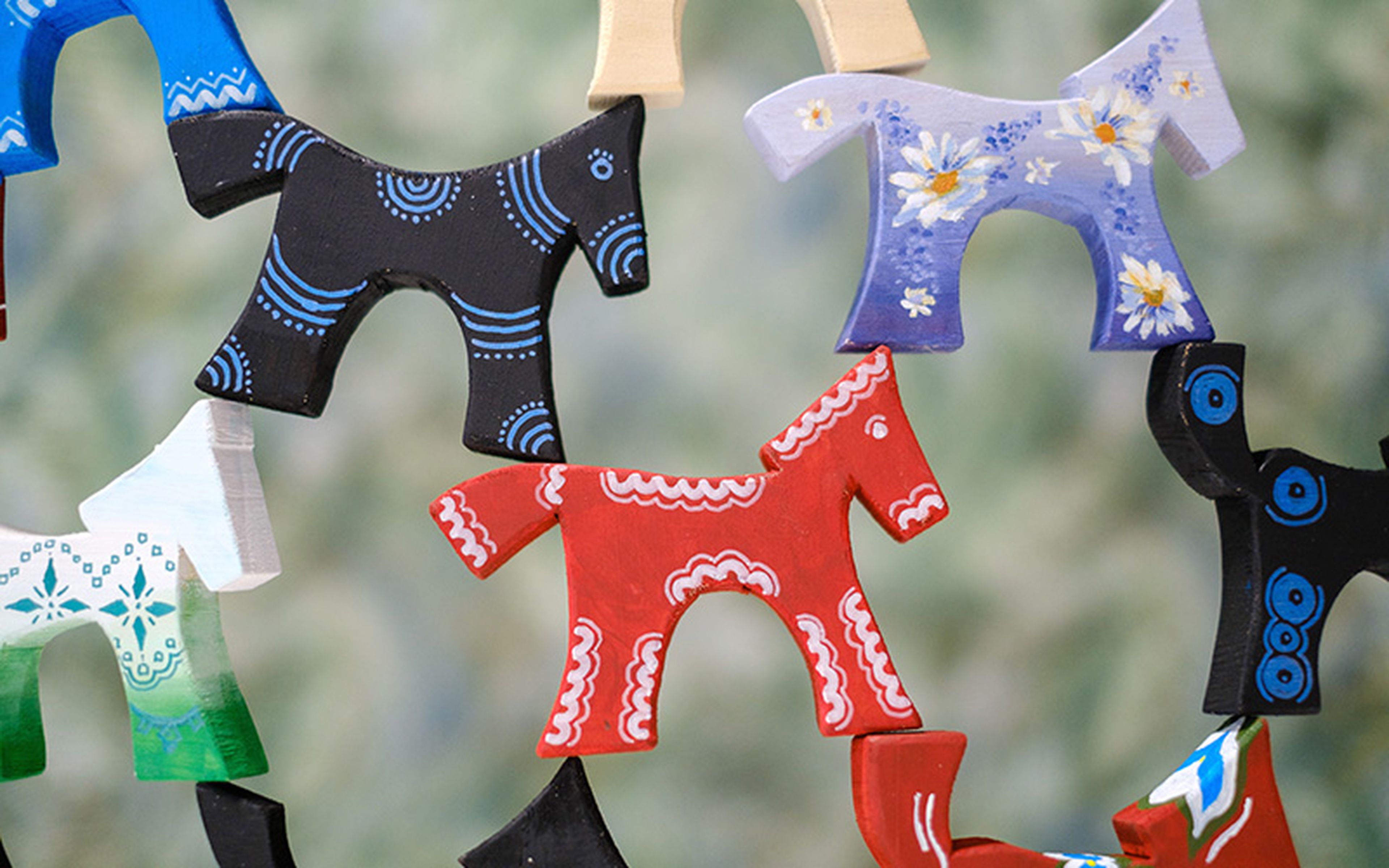
"There are currently eight places in the world called Sweden, which could be quite confusing, in our opinion," says Visit Sweden on its website. Even though disappointment could indeed greet a tourist searching for a colorful Dala horse in Sweden, Maine (not to be mistaken for New Sweden, Maine) or fermented herring in Sweden, South Carolina, chances are flat-pack furniture would be readily obtainable.
Of course, the fact that "Sweden" is the name of the Scandinavian country, not any particular settlement or airport therein, makes the case for genuine confusion less plausible. Additionally, it potentially shuts down the application because acquiring a trademark for a country's name as such is not permitted under EU law. To wit, Article 7 of the EU Trademark Regulation excludes from registration trademarks which consist exclusively of signs or indications of geographical origin while reserving for common use terms "which have become customary in the current language." Following another line of argument, a registration for "Sweden" could be rejected as contrary to widely held public policy and interest.
Visit Sweden acknowledges this fact while proffering a workaround: "Under the current legislation, countries can't be trademarked, but destinations can. Since Sweden actually identifies as a destination, we are hopeful for a favourable outcome." This outcome is being supported by a narrow Nice class selection (relating only to travel information services in class 39) and a petition, presumably to help deliver the "consent of the competent authority" that may overcome any statutory exclusions.
With dazzling legal gymnastics required to push the application forward, a stronger motivation for all the hassle could be the desire to avoid an international trademark dispute like that which has embroiled fellow Nordic country, Iceland. The back-and-forth tussle between the island nation and a British frozen-food supermarket of the same name has played out at a glacial pace since 2016. Currently, an appeal against the revocation of the retailer's EU trademark sits before the General Court of the European Union.
In the end, were a trademark registration for "Sweden" to be granted, the questions of government monopoly would only begin in earnest. Would countless maps and tourist guides suddenly need a license?
Better to take a fika (coffee break) and have a cinnamon bun.
Leaving "Scandi" pluck to return to the home of the supermarket Iceland, the United Kingdom Intellectual Property Office (UKIPO) announced a milestone in its digital transformation last week. One IPO Search, the Office's latest patent search tool, launched on January 22, 2025, with the aim of further democratizing access to patent information.
The new system replaced the 13-year-old Ipsum as part of a wider modernization program that is hoped to deliver an innovation stimulus to local businesses. The key improvements vaunted are a simplified keyword search function that facilitates vernacular descriptions, visual data analysis and downloadable results, all made available through an intuitive user interface intended to be novice-friendly.

Early responses have been notably positive, "with 82% of users agreeing the service met their needs and 86% saying they found it easy to use." This departs from the muted fanfare the United States Patent and Trademark Office (USPTO) received when it completed the rollout of the Patent Center system in November 2023, fully taking over operations at the end of a lengthy period of parallel use with two older tools. An even more stark contrast is seen with the teething problems felt by the USPTO when its new Trademark Search system debuted that same month.
It would seem the UKIPO has learned some practical lessons from the experiences of its counterpart across the Atlantic – continuity of service being almost as welcome as betterment given that the United Kingdom received nearly 20,000 patent applications in 2023.
"For start-ups and more established businesses alike, understanding the patent landscape is crucial but can be time-consuming and complex. The new IPO Search tool will help remove such barriers, putting vital information at innovators' fingertips," commented Tara Gillam of Innovate UK Business Growth. "By making it easier to access and understand existing patent information, companies can better identify opportunities, make more informed decisions about their R&D investments and better understand and protect their Intellectual Property."
The UKIPO has shared its plan for future updates to One IPO Search, beginning with saved searches and patent notifications coming later this year. Thereafter, users can expect the integration of AI-assisted-, trademark and design searches, as well as APIs for handling bulk data.
Despite quickly supplanting Ipsum, the new system is still in its beta phase and may require periodic maintenance. To this end, users of One IP Search can provide their feedback to help guide any improvements.