客户服务区域



Everyday IP: How Intellectual Property powers the world of sports
The clock is ticking down. A player winds up for a last-second strike as the crowd falls silent. The ball arcs toward the goal and beats the keeper, hitting the back of the net. Game over.
Moments like these feel raw and unfiltered. Sport, at its best, is the embodiment of human skill meeting human will. But behind every buzzer-beater, every photo finish, every gravity-defying save is something less obvious but just as powerful: Intellectual Property (IP).
That is exactly what World Intellectual Property Day celebrates: the creativity that shapes how we live, work and yes, play. In 2026, as we reflect on the Winter Olympics and gear up for the global spectacles of the FIFA World Cup and the Commonwealth Games, the connection between sport and IP becomes impossible to ignore. These events are competitions that showcase pure determination — engineered, branded and broadcast to billions.
If World IP Day celebrates what the mind can do, then sport is one of its most exciting playing fields. And like any great game, it all starts somewhere simple.
From backyard games to patented play: how sports innovation begins
Before the roaring stadiums and billion-dollar broadcasts, most sports began on a much humbler scale, often in backyards or improvised courts.

Growing from a YMCA International Training School gymnasium in 1891 to a multi-billion dollar industry that spans the globe, basketball is itself a relatively "new" sport.
Take basketball; it started with two peach baskets nailed to opposite ends of a gymnasium balcony and a basic set of rules designed to keep students in Springfield, Massachusetts, active and diverted during cold winters. But it did not stay small-time for long. The game quickly developed alongside improvements in equipment, from standardized hoops and breakaway rims to precisely engineered balls that bounce just right. Each new technology refined how the game was played, making it safer and more competitive.
This pattern repeats across sports. What starts as play becomes performance, which demands enhanced tools.
Football offers a prime example. The game may have a direct lineage that stretches back centuries, but the equipment is anything but static. Consider electromagnetic field generators built into goalposts to detect whether the ball has crossed over, or protective equipment like advanced shin guards. There is even wireless charging for footballs, allowing accelerometers and gyros placed inside to capture the tiniest player metrics and eke out the narrowest edge through training.
Of course, innovation alone does not fill stadiums. For sport to become a global phenomenon, it needs something else entirely: identity.
From teams to trademarks: sport and branding
Think about your favorite team. Chances are, you can picture the logo instantly: the colors, the symbols and the mascot. These purposeful details define carefully crafted identities, protected through trademarks and design rights.
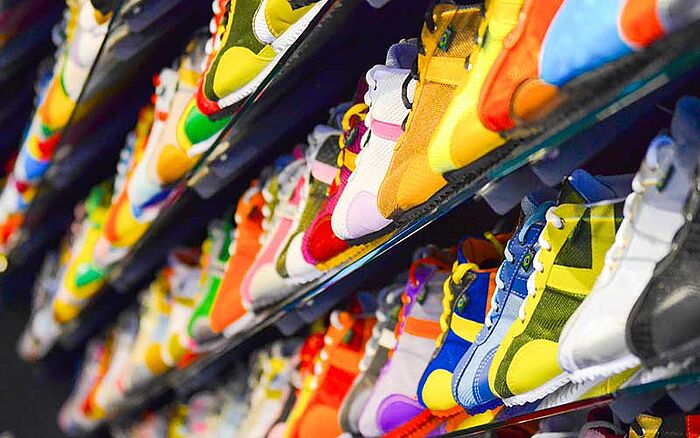
Branded kits are a major source of revenue for many sports teams, but the high cost to the fans is a frequent source of criticism.
Events and sporting organizations rely on trademarks to protect their names, logos and visual identity, adding a dimension of commercial competition to athletic contests. At the same time, this branding power transforms local teams into icons. It allows fans across continents to share a story and moments of victory or disappointment. A connection expressed through jerseys, caps and merchandise, all backed by enforceable IP rights.
There is also the experience of watching the game itself. Whether online or on television, sports depend on copyrights — another form of IP. Broadcasts, replays, commentary and even highlight clips are protected content, enabling rights holders to control how their material is shared and monetized.
Without these protections, the reach of spectator sport would shrink dramatically, meaning there would be fewer incentives to invest in production quality and distribution.
Of course, this is not the case, and from the comfort of home, fans get to cheer or hold their breath as hearts and records are broken. Meanwhile, the more media exposure a certain sport gets, the greater its global reach; and as this growth happens, the technology that powers performance leaps ahead.
The future of sport: smart, connected and patented
Athletes today are being assisted by entire ecosystems of data and intelligent solutions. Training, in particular, is undergoing a major transformation. With the help of patented technologies, sportspeople can bring greater precision and insight into their game. In football, for example, electronic systems use image-based solutions to track player positions and ball movement in real time, enabling deeper performance analysis. While not training tools themselves, such advances are shaping how teams study gameplay and prepare for competition.
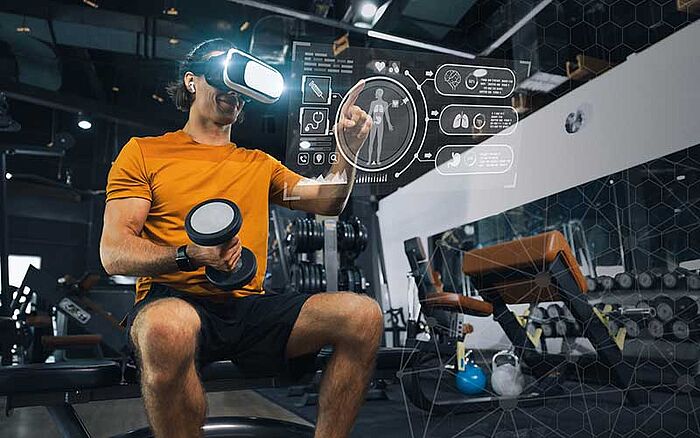
The mechanics of exercise stay the same, but technology is helping make workouts smarter and better optimized for recovery and results.
Some innovations even get physical. Players can hone their passing or tackling skills in realistic scenarios without the injury risk of full-contact play. Even after the training session ends, wearable technology and data analytics influence how athletes recover, providing information on heart rate and other key health metrics.
Almost every major breakthrough in sports science contributes to a connected system of IP that supports athletes at every stage, yet for fans, most of this remains invisible. Behind the faster times and sharper plays is a constant stream of invention that pushes the limits of what people can achieve.
That is the paradox of sport innovation: the more advanced it becomes, the less we notice it.
Celebrating the resolve propelling sport forward
World IP Day is, at its core, a celebration of human creativity and purpose. It is a reminder that even the most familiar experiences, like watching a game or cheering for a team, are molded by originality, invention and a host of legal protections.
On the surface, sport is about movement and reflexes, with players pulling off the kind of flourishes that make us rise from our seats. Beneath that motion, another kind of activity is at work. IP mechanisms operate in the background, protecting the inventions that improve the game, the identities that define it and the systems that bring it to a global audience.
The next time you watch a last-second goal or a dramatic finish, look beyond the play itself. The athletes may take the medal, but IP makes the experience possible in ways worth celebrating.
Filed in

Explore how Intellectual Property law interacts with Easter folklore to support products in competitive markets, from egg-dispensers to iconic chocolate bunnies.
Everyday IP: Easter and the economics of commercial distinctiveness
Explore how Intellectual Property law interacts with Easter folklore to support products in competitive markets, from egg-dispensers to iconic chocolate bunnies.

Everyday IP: Coffee (and tea) to ease the daily grind
Discover how trademarks, patents and trade secrets shape your morning coffee or tea ritual. Experience everyday Intellectual Property in action.

Everyday IP: Back to school with textbooks, mascots and exclusive rights
Discover how intellectual assets shape school life, from student creations to mascots and educational resources.

Ice cream innovations: IP with a cherry on top
From soft serve machines to crispy cones, discover how patents and trademarks shape the frozen treats we love.

Get the updates in your inbox
Subscribe to get the latest news and updates.
No spam. We promise.