After an aching journey, a sought-after hotel sign brings great relief. You may be in a city you barely know, with your luggage pulling at your arm and the day still sitting heavily on your shoulders, but the name above the entrance already tells you something all-important: This stay will make good on its promises.
That expectation is part of the work of Intellectual Property (IP) in hospitality. A hotel brand is a set of emotional associations built attentively enough to travel internationally from one location to another. It tells the guest what awaits them before the room key is issued.
Whether you are stepping into a Marriott in Munich or a Hilton in Houston, recognizable IP helps turn a strange place into a more predictable experience. The trademark creates the first instant of recognition, while the broader IP portfolio protects the details that make the stay feel consistent as soon as the room door closes behind you.
Trademarks as your tour guide
Once a guest crosses the threshold, the hotel name no longer has to do all the work. Other signals begin to take over, some obvious, others sitting just below awareness.
This is where hospitality makes particularly interesting use of trademarks and adjacent rights. Brand value can lie in an aroma, a short melody or the look of a room arranged in a way people learn to associate with a specific operator. Not every element will qualify for registration, but each can contribute to the commercial character of the property.
Trying something new and unexplored is essential to almost any vacation, but having a trusted brand also be a part of it brings a measure of reassurance to fall back on.
Fragrance shows how subtle this IP strategy can become. Although scent marks remain rare and difficult to secure, they are a useful reminder that source identification is not limited to what guests can see. The European Union trademark for the "smell of freshly cut grass," now expired, is often cited in this context. Hotels such as Westin have approached the same territory through proprietary scent strategies like "White Tea," where controlled, standardized use approaches the effect of formal trademark protection.
Sound is moving in a similar direction. The Indian Hotels Company Limited has secured a sound mark for its Taj brand. A few notes, used routinely, can become part of how a stay is remembered.
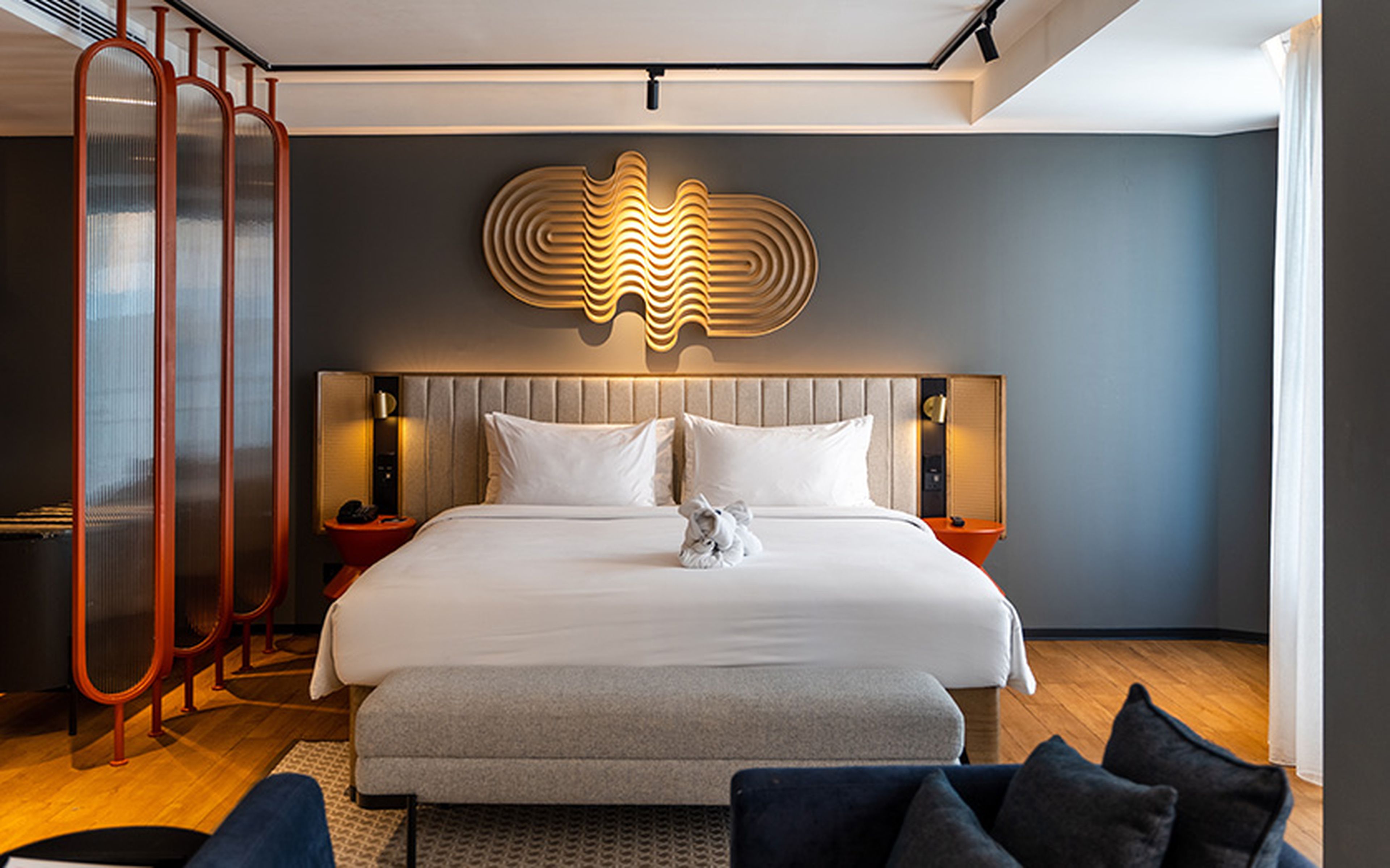
The built environment can carry its own legal weight as well. In the United States, trade dress has been described as the "total image of the business," a concept that may cover the overall appearance of hospitality spaces when they are sufficiently distinctive. For hotels and restaurants, this can bring the physical composition of a place into the scope of IP protection.
Taken together, these assets show how meticulously a hotel's atmosphere can be constructed. What feels spontaneous to the guest may, from a business perspective, depend on precise legal mechanisms working unseen in the background.
Architectural spaces, indoors and outdoors, can contribute as much to a business's identity as to our enjoyment of it.
From the entrance, the experience moves into the guestroom, where comfort becomes less a question of recognition and more a matter of science.
Inventing rest: patented peace and ease
Leaving the lobby for your private space, you enter a comfort machine — filled with unobtrusive inventions that pre-empt your every need. We have all felt the frustration of poor sleep in a hotel room that just is not quiet enough. In modern hospitality, every little irritation can be an engineering challenge to be solved by patents.
Consider the Crowne Plaza WorkLife Room. The invention addresses a common problem in hotel design: how to effectively combine rest and productivity in a limited space. By rotating the bed and structurally separating the work and sleep zones, the design creates a clearer psychological and functional distinction between responsibility and relaxation, all within the same footprint.
Even your morning shower is a masterpiece of fluid dynamics. To improve environmental performance without making you suffer the disappointment of low water pressure, some hotel brands utilize specialized plumbing to manipulate how water behaves. Some systems use air-induction technology to inject air directly into the water stream, fattening the droplets to feel larger and more soothing as they hit your skin. Others utilize atomization, breaking the water into millions of tiny, high-pressure droplets that create a luxurious mist while using significantly fewer resources. These features are often proprietary solutions for steady calm, ensuring you feel pampered while the hotel can push for its sustainability goals.
A well-crafted hotel room prioritizes ergonomics and aesthetics and may even pay homage to the locale's character or traditions in its décor.
Of all these innovations, however, one reigns supreme: the white centerpiece of relaxation that draws your eyes the second you step into the room. It is the definitive focal point of the hotel stay, a carefully calibrated sanctuary of thread counts and tension-balanced springs where the guest finally surrenders to the soft monopoly of proprietary pillowiness.
The best of the beds
It is a feat of marketing and legal genius that a hotel has managed to turn the most mundane object — a mattress — into a brand repository. Launched by Westin Hotels & Resorts in 1998, the Heavenly Bed proved so successful that, much like its complementing layers of plush topping, anti-bacterial silver-fiber weave and gel-infused memory foam, the chain decided to stack IP rights to protect the bedding itself. By trademarking the name applied to Simmons' formerly patented construction, the business is able to ensure you will not find the exact sleep anywhere else.
Diligent brand stewardship has turned an object usually forgotten by breakfast time into a luxury product sold directly to consumers. This move reinforces customer loyalty while creating a new revenue stream anchored in protected IP.
In spite of all this work, the IP behind the product is discreet to the traveling beneficiary, leaving your fuzzy thoughts before you drift off lingering on how hard it will be to leave the coziness of bed when you wake in the morning.
The lasting impression of IP rights
As you finally check out, you conclude a 24-hour tour of a complex, multi-level IP portfolio. From the signature scent in the lobby to the fine-tuned pressure of your morning shower to the calculated bounce of the mattress, every moment was supported by a legal framework designed to slip by unnoticed but remain at the forefront of your senses.
If it has done its job properly, hotel IP only comes to mind when it is time to make a recommendation – or book another trip.
The patents, trademarks and design rights of hospitality perform best when they fulfill their legal functions and contribute to the guest's harmony of comfort and trust.
Next time you tap your key card or sink into a deliciously opulent pillow, consider what enables that dependability from one city to the next. IP allows hospitality brands to operationalize the experience, embedding a curated mood into systems that can be scaled and delivered worldwide.
Make Dennemeyer the destination of choice for all your IP needs.