Espace client



Ambush marketing and major sports events
With the FIFA World Cup taking place in North America and the Commonwealth Games headed for Glasgow, Scotland, 2026 promises to be a year of sporting action. Kicking things off this month will be the XXV Winter Olympic Games in northern Italy.
International events such as these present opportunities not just for athletes and teams but also for businesses. Indeed, the Olympic Partner (TOP) program is the highest level of Olympic sponsorship, with current members being AB InBev, Airbnb, Alibaba, Allianz, Coca-Cola, Deloitte, Omega, P&G, Samsung, TCL and Visa.
For many years, businesses that are not official sponsors have used advertising and public relations stunts to promote their brands on the back of global sports events, a practice that has become known as ambush marketing. Over the past 30 years in particular, these actions have grown as marketers have come up with innovative, witty, daring and sometimes subversive ideas. In response, organizers and host governments have fought back with new rules and legislation to protect the interests of official sponsors, athletes and fans.
What is ambush marketing?
Jerry Welsh, head of marketing at American Express in the 1980s, coined the term "ambush marketing" for a strategy where a company attempts to associate itself with a particular contest or exhibition without having an official sponsorship agreement.
Hence, to illustrate, FIFA has been fighting "marketing activities which try to take advantage of the huge interest and high profile of an event by creating a commercial association and/or seeking promotional exposure without the authorization of the event organiser."
Meanwhile, the International Olympic Committee (IOC) has defined ambush marketing as including "all intentional and unintentional attempts to create a false or unauthorized commercial association with the Olympic Movement or the Olympic Games. Ambush marketing includes: (a) a non-partner company's use of creative means to generate a false association with the Olympic Games, (b) a non-partner company's infringement of the various laws that protect the use of Olympic imagery and indicia, and (c) a non-partner company's activities that intentionally or unintentionally interfere with the legitimate marketing activities of Olympic partners."
To this day, such self-interested behavior is often seen in sports events, where third-party brands seek to gain exposure and benefit from the immense public draw. However, ambush marketing raises legal and ethical concerns as it can infringe on the rights of official sponsors and dilute the value of their investments.

The arrival of the Olympic Games or the World Cup in a city creates unignorable promotional opportunities for those with deep pockets or brass necks. On-site marketing near venues or participants' "villages" is highly sought after, but not always authorized.
Four main types of ambush marketing have been identified.
- Predatory ambushing (by association): Presenting a company deceptively as the official sponsor of an event, directly referring to its trademarks.
- Coat-tail ambushing: Indirect association between the ambusher's brand and the event, aimed at creating ambiguity regarding the identity of the official sponsors. For example, at the Los Angeles Olympics in 1984, Kodak sponsored television broadcasts of the Olympics but not the Games themselves, which were sponsored by Fuji.
- Saturation ambushing: Intensifying media advertising over a period of time corresponding to that of the high-profile event, without drawing any explicit connections between the two.
- Insurgent ambushing: Promotion of a brand by capitalizing on chance occurrences that take place during the sporting event or at adjacent venues. These are typically opportunistic and ad hoc.
Examples of ambush marketing
Atlanta's 1996 hosting saw a particularly (in)famous example of Olympian ambush marketing. Reebok was one of the official sponsors of the Games, but Nike created a "Nike Village" in the center of the city, a few blocks away from the actual Olympic village and the main stadiums. This led to the public perception that Nike was an official sponsor (without the $50-million-USD fee) and resulted in tighter enforcement thereafter.
In the world of soccer, Bavaria Beer, a Dutch brewery, conducted a prominent ambush marketing campaign during the 2010 FIFA World Cup in South Africa. It dressed a group of women in orange mini-dresses – the color associated with the Dutch national team – leading to their ejection from the stadium,
as they were deemed to be promoting Bavaria Beer, a non-sponsor brand. Two of the women were arrested, but charges were ultimately dropped.
A notable case of insurgent ambushing began ahead of the 2014 Winter Olympics in Sochi, Russia. While it was passing through Moscow, the Olympic Torch went out, and a willing bystander relit it, supposedly with a Zippo lighter. Zippo, which was not a sponsor of the event, immediately posted a picture on its social media with the hashtag #ZippoSavesOlympics.
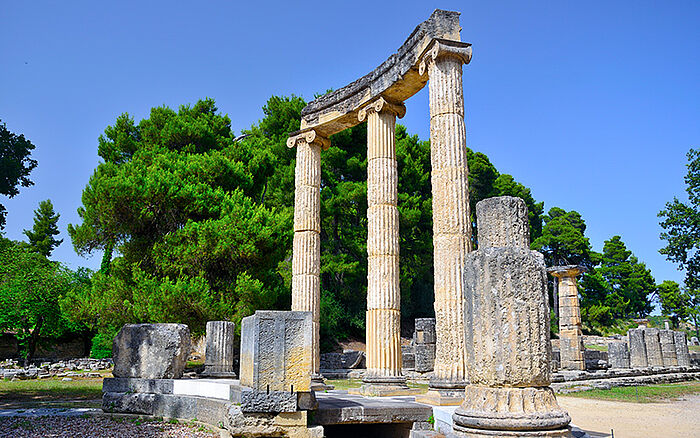
Despite its current association with ancient Greek traditions, the modern Olympic flame did not appear until the 1928 Amsterdam Games, where it was lit atop a tower ostensibly to guide people to the event's location.
The spur-of-the-moment campaign contained a direct reference to the Olympics in a commercial context, in violation of the laws on advertising activity. The Sochi Games Organizing Committee requested that Zippo cease the campaign immediately and remove all offending content, which the company promptly did. Soon after, however, a new post appeared: "Zippo: Perfect for all winter games. *wink wink*"
Risks of ambush marketing
When outside brands associate themselves with an international showcase without paying for the rights, it dilutes the recognition, exposure and benefits that official backers expect. Ambush marketing can also harm organizers by impacting their ability to attract and retain funding for future occasions. Moreover, exploitative promotions can mislead consumers by blurring the lines between official sponsors and third parties, eroding consumers' trust and affecting their purchasing decisions. For this reason, ambush marketing can be classified as a multi-offensive practice.
Underhand marketing can also occur, for example, when sponsors of sports federations or individual athletes take advantage of the chance to associate their brand with a competition by proxy. In this context, businesses should be careful to avoid "overstepping" their contractual boundaries and giving the appearance of an undue affiliation with a big sports event by "misusing" their sponsorship of the athletes or the sports federation itself. For example, among other measures, they should refrain from using any Olympic properties in their campaigns and instead use only neutral images of the athletes in a neutral setting (i.e., generic advertising featuring participants, provided no direct or indirect association with the Olympics is created).
Since the 2016 Rio Olympics, athletes have been permitted (see revised Bye-law 3 to Rule 40 of the Olympic Charter) to continue their personal sponsorship campaigns during the competition if they respect certain restrictions. Among other stipulations, the campaign should predate that year's Games, be approved by the participants' National Olympic Committees (NOCs), exhibit no intensification during the period of competition and contain no reference to Olympic properties. In such respect, Guidelines for Rule 40 are published on the IOC's website for each edition of the Games (see Rule 40 Resources for Milano Cortina 2026).
Combating ambush marketing
Organizers of major sports events are fully aware of the existence of unscrupulous advertisers and can put contractual agreements into place to block their activities. Hence, exclusivity clauses frequently prohibit athletes, teams, participants or spectators from endorsing or promoting non-sponsor brands during tournaments. In addition, no-marketing-rights clauses are typically included in agreements with contractors at all levels (who are not also official partners of the Games).

Not all ambush marketing is audacious. In 2024, the United States Olympic & Paralympic Committee accused the drink Prime Hydration of trademark infringement in its promotion of a partnership with basketball Olympian Kevin Durant. The parties reached a confidential settlement later that year.
Trademark laws also play a crucial role, preventing non-sanctioned third parties from using marks, logos or other distinguishing or evoking elements of a big event. Unauthorized use of such distinctive signs or a set of purposely evoking elements can lead to legal action, including injunctions, damages and even criminal charges.
Of course, legal protections are not limited to trademarks and contracts. It follows that rights holders can take action against ambush marketers for other IP infringements, such as copyright violations. This includes unlicensed use of materials such as event footage, logos or photographs, which diminishes the value of the official sponsors' investments.
Nairobi Treaty
For Olympic and Paralympic events, the IOC benefits from an exceptional international legal instrument that protects the Olympic symbol of five interlaced rings. Adopted in 1981, the Nairobi Treaty requires ratifying states to refuse or invalidate the registration as a trademark and to prohibit the use for commercial purposes of any sign "consisting of or containing" the Olympic symbol, except with the IOC's authorization. More than 50 states have ratified the Treaty.
Countries organizing and staging the Games, with the involvement of municipalities, NOCs and the Olympic Organizing Committee, usually issue specific legislation to protect Olympic properties and prohibit ambush marketing.
London 2012
An example of bespoke temporary regulation can be seen in the establishment of the London Olympics association right (LOAR), which created a new time-limited IP right specifically for the 2012 competition. The purpose of the LOAR was to prevent any unauthorized association with the Olympic or Paralympic Games by parties not directly affiliated with the Games' organizers.
Nevertheless, marketers tested the limits of the law. Nike's "Find Your Greatness" campaign consisted of footage shot in (and bearing the signs of) various locations sharing the UK capital's name, including London, South Africa; London, Canada; London School, Qatar and London Bridge, United States. (As a sidebar, this London Bridge currently scorching under the Arizona sun is truly worthy of the name since its outer stone construction originally spanned the River Thames. The defunct structure was sold to U.S. businessman Robert McCulloch, Sr. in 1968, dismantled and shipped through the Panama Canal in 10,276 granite blocks.)
Nike's videos depicted everyday athletes around the world pushing themselves to achieve personal goals and realize their potential in humble, unsung ways. The message was implicit but clear, equating athletic excellence with the Olympic spirit.
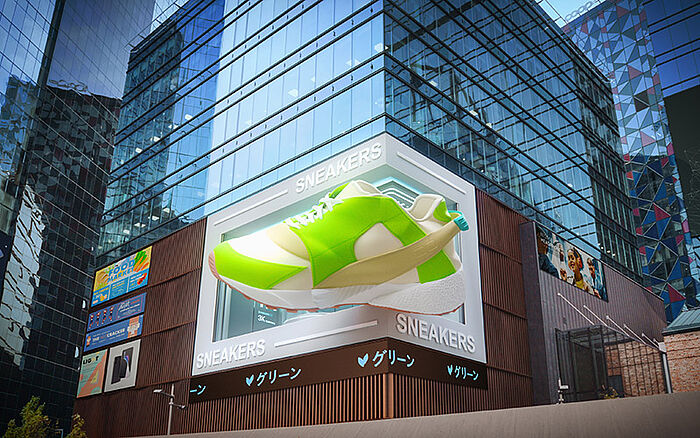
Skirting the line of ambush marketing is legally and reputationally risky, but the commercial benefits of a successful campaign are clearly enough to entice some companies to try their luck.
The continuous mentions of "London" and the simultaneous depiction of athletes practicing "Olympic" sports could conceivably have led viewers to believe that Nike was linked to the Games; however, Nike argued that the campaign did not create a specific connection to the host city or the Olympic Games held there.
Milan-Cortina 2026
For 2026's Winter Olympics, the Special Italian Olympic Law (Legislative decree No. 16 of March 11, 2020, coordinated with the law of conversion No. 31 of May 8, 2020) prohibits the registration as a trademark of any sign that resembles an Olympic property, such as the symbol, flag, emblems and "identifying expressions" of the Games. It also prohibits the registration or use of a mark that includes the words "Olimpiade" or "Olimpico" in any grammatical construction and language and the words "Milano Cortina" in combination with any rendering of "2026."
For all practical purposes, the Law prohibits ambush marketing, even without ever citing it. It does this by banning advertising that qualifies as parasitic, fraudulent, deceptive or misleading, and forbids marketing activities aimed at obtaining an economic or competitive advantage by:
- Creating connections (even indirect) between third-party brands and the Games capable of generating confusion about the official sponsors
- Falsely representing and declaring to be an official sponsor
- Promoting third parties' brands in a way that can create the false impression of them being an official sponsor
- Counterfeiting
Sanctions from €100,000 to €2.5 million are imposed for parasitic activities.
An ongoing challenge
Ambush marketing actions have increased significantly over the past 30 years, encompassing campaigns by both large companies and small and medium-sized enterprises. The tactics involved are constantly evolving and can sometimes be unpredictable and subtle. Contrasted against the potentially huge benefits for ambushers, the investments required are often small, particularly in the age of social media and viral marketing. Meanwhile, the damage to event organizers, rights holders and the public can be significant, considering that ambush marketing can also undermine the value of sponsorship investments and dilute the exclusivity that comes with official partnerships.
In this context, trademark protection, other IP laws, event-specific legislation (which is becoming increasingly particularized and comprehensive) and contractual agreements aim to safeguard rights holders for the benefit of all.
The measures implemented for the Olympics have proven to be firm, severe and effective, which is a positive signal for companies willing to become financial backers: their rights and investments will be protected as much as possible. Organizing bodies must continue to work in cooperation with the governments of host countries to ensure that there is effective and up-to-date legislation against ambush marketing, while allowing for good-faith competition.
Legal assistance or guidance by a specialized team of professionals is essential to assess ambush marketing cases and to act against them in a timely manner. Moreover, a law firm's counsel can benefit businesses by offering recommendations on how to plan – and continue – compliant sponsorship campaigns featuring participants.
Filed in

Dennemeyer's legal experts and services recognized for global excellence.

What the "TM" and circled "R" symbols mean, and why businesses need them.
IP FAQ: Which trademark symbol should I use?
What the "TM" and circled "R" symbols mean, and why businesses need them.
WTR 1000: Global acclaim for Dennemeyer in 2026
Dennemeyer's legal experts and services recognized for global excellence.

Faux fashion: how TikTok became a runway for counterfeits
Discover how counterfeiting takes advantage of social media trends and how Intellectual Property rights help brands reclaim their authenticity.

Can I copyright a name, and why a trademark might be the answer?
Trademarks, rather than copyrights, are the preferred way to protect a business name.

Get the updates in your inbox
Subscribe to get the latest news and updates.
No spam. We promise.