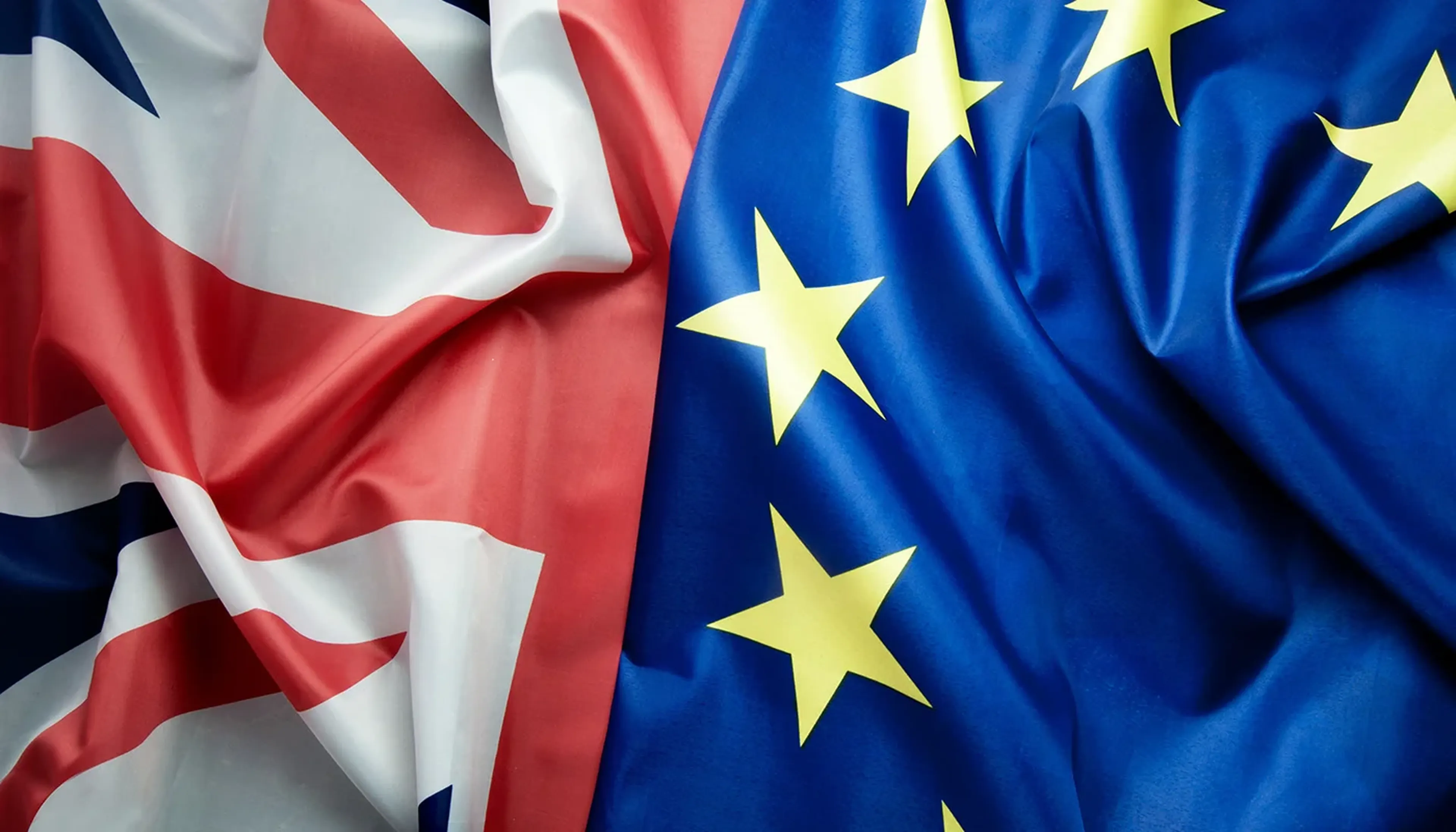
10_years_on_from_the_Brexit_vote.jpg
知的財産関連ブログ / 10 years on from the Brexit vote

10 years on from the Brexit vote

June 2026 marks the 10th anniversary of the United Kingdom's referendum on membership of the European Union. By a narrow majority, the country consented to end a period of harmonization that had begun in January 1973 with the then European Communities. Through an unheard-of withdrawal from the world's most sophisticated political and economic union, the Brexit vote has impacted many areas of law and policy over the past decade, including Intellectual Property (IP).

Get in touch with our legal team today!

In the short term, and from an IP perspective, most attention was focused on ensuring a smooth transition for EU trademark and design registrations. Over time, however, uncertainties have emerged, notably regarding the United Kingdom's IP rights exhaustion regime and the extent to which the country would pursue an independent juridical course or remain aligned with EU trademark and design law and its interpretation.

The evolution of Brexit

Although the vote to leave the EU took place on June 23, 2016, disagreements over the United Kingdom's aims and an unprecedented extrication procedure led to many years of negotiation. Under the European Union (Withdrawal) Act 2018, the United Kingdom officially left the EU at 23:00 on January 31, 2020, although a transition period ran until 23:00 on December 31, 2020.

The Brexit Withdrawal Agreement between the EU and the United Kingdom included a Protocol on Northern Ireland, under which Northern Ireland remained in the EU single market for goods. This was revised by the Windsor Framework, which came into effect on October 1, 2023, and was designed to reduce checks on goods moving from Great Britain to Northern Ireland.

Trademarks and designs after Brexit

During the talks, there was much discussion about what would happen to EU trademarks (EUTMs) and registered Community designs (RCDs, now EU registered designs), with a number of options being considered. In the end, the United Kingdom adopted the straightforward approach of creating equivalent UK rights for all EUTMs and RCDs in force at the end of the transition period.

Rear view of a woman speaking into a microphone during a press conference or political debate while addressing a panel of officials in a conference room.

The arduous negotiation process for the United Kingdom's withdrawal from the EU formally began on June 19, 2017, going through seven rounds of talks before a draft agreement was approved by the European Council in November 2018.

On January 1, 2021, therefore, about 1.4 million trademark rights and some 700,000 re-registered UK designs were added to the UK national registers. The process went smoothly, with no fees to be paid by users. Provision was made for applications pending and where cancellation actions were pending on the withdrawal date.

One question that did arise concerned proof of genuine use / reputation for equivalent trademarks. Owners of such marks could rely on use within the EU for a five-year period ending on December 31, 2025. This means that, as of January 1, 2026, equivalent UK marks not used in the United Kingdom during that five-year period are vulnerable to cancellation for non-use.

The position regarding design protection has involved slightly more maneuvering than for trademarks. Notably, the United Kingdom decided to join the Hague System for international design rights on March 13, 2018, having previously been a part of that system as an EU Member State but not in its own right.

There have been criticisms that the post-Brexit UK design system has too many overlapping registered and unregistered rights. In a government consultation in 2022, smaller companies, lone designers and their representative organizations claimed that the design system was too complex. The government is currently considering reform in this field and is expected to announce its proposals this year.

Exhaustion of IP rights

One area not resolved by the Withdrawal Agreement was how the exhaustion of IP rights would apply in the United Kingdom post-Brexit. In 2021, the UK government carried out a consultation to test four options.

In May 2025, the government announced that it would maintain the so-called UK+ exhaustion regime. This structure, which has been in effect since the United Kingdom left the EU, provides that trademark and design rights in goods are exhausted in the country when a good is placed on the market either domestically or within the European Economic Area (EEA).
 

Aerial view of cargo ships docked at the Port of Southampton, with colorful shipping containers stacked on deck and along the terminal, showing cranes and port infrastructure.

Once a product is sold within a certain jurisdiction by a brand owner or another party authorized to do so, the IP rights are said to be "exhausted," meaning the purchaser can (in most cases) resell the good without committing IP infringement. 

The government stated in its assessment that the UK+ regime "was the option that could best provide an effective balance to the different interests in the marketplace." Moreover, it provided continuity for businesses, investors and IP rights holders and would not require an implementation period. According to the then Parliamentary Under-Secretary of State for AI and Digital Government, Feryal Clark, the UK+ regime: "[E]nsures that our world-leading inventors and creators can invest their time and energy in developing new products and technologies knowing that our parallel importation laws will help to support them make a living from their IP assets. These laws will also facilitate competition in the marketplace. And they will enable the British public to have fair access to IP-protected goods."

The UK+ regime was favored by a majority of respondents who expressed a preference in the consultation, while over one-third favored a national exhaustion approach (despite being recognized by the government as irreconcilable with the Northern Ireland situation). The present system's confirmation has been broadly welcomed by IP practitioners, although it does mean that there is an asymmetry: IP rights owners can prevent goods being imported from the United Kingdom into the EEA, but not from the EEA into the United Kingdom.

However, IP rights holders can object to imports where they have not consented to the goods being put on the market within the EEA or where there are legitimate reasons to oppose such entry. This may lead to test cases; for example, owners of pharmaceutical trademarks may object to the marketing of generic products where there are concerns about labeling, safety information or compliance with UK regulations.

Divergence from EU law

The EU (Withdrawal) Act gives the UK Supreme Court and the Court of Appeal the ability to depart from retained EU case law on the same basis that the Supreme Court can depart from its own earlier precedents. UK courts have been invited to diverge from the law established by the Court of Justice of the European Union (CJEU) in several IP cases over the past five years, but have generally opted not to do so.
 

Exterior of the Royal Courts of Justice in London, showing the Gothic-style facade with pointed arches, tall spires, and detailed stonework along the Strand. [alamy.com]

The Court of Appeal (England and Wales) holds both criminal and civil divisions and thus rules on cases related to IP. It is the second-highest court in its jurisdiction, below only the Supreme Court of the United Kingdom.

In a copyright case, Tunein Inc vs. Warner Music UK Ltd & Anor, concerning "communication to the public," the Master of the Rolls said that it would be "both unnecessary and undesirable" to depart from the extensive body of retained EU case law, adding: "To do so would create legal uncertainty for no good reason."

Similarly, in the trademark dispute Thatchers Cider Company Ltd vs. Aldi Stores Ltd, Aldi asked the England and Wales Court of Appeal to break with the CJEU ruling in L'Oreal SA and Others vs. Bellure NV and Others, but the Court declined. In his judgment, Lord Justice Arnold gave multiple justifications, including: Parliament had not repealed the relevant provisions of the Trade Marks Act 1994; harmony with the EU was desirable unless the CJEU's interpretation was erroneous; the CJEU judgment provided a principled basis for decisions; it was not an isolated decision and deviating from the CJEU would have caused "considerable legal uncertainty."

The ICE case

UK courts have only diverged from the CJEU in one IP case so far: Industrial Cleaning Equipment (Southampton) Ltd vs. Intelligent Cleaning Equipment Holdings Co Ltd & Anor. This concerned rival uses of the acronym "ICE," and raised the subject of limitation by acquiescence.

Article 53(2) of Regulation 40/94 and the equivalent provisions in replacing versions of the legislation essentially provide that the proprietor of an earlier mark who has acquiesced for a period of five successive years in the use of a later mark shall no longer be entitled to challenge the validity or oppose the use of the later mark.

In its judgment in Budvar in 2011, the CJEU said that the proprietor of the earlier trademark must be aware both of the registration and the use of the later trademark. However, a prior European Union Intellectual Property Office (EUIPO) Board of Appeal decision and the EUIPO Guidelines have held that the proprietor of the contested mark is not required to prove cognizance of both use and registration. This position has been effectively endorsed by the EU General Court in several cases, and the CJEU has declined the opportunity to review those judgments.

Professional woman seated in a car, examining legal paperwork and case materials, including filing documents and evidence, while traveling to attend court proceedings.

In rare instances, the CJEU may rule in a way that contradicts the EUIPO's praxis. However, in future decisions, the Court may depart from its own decisions to reharmonize the interpretation of trademark regulations.

In its judgment in the ICE case, the England and Wales Court of Appeal noted that "the case law of the Boards of Appeal of EUIPO and of the General Court appears to be in conflict with the case law of the Court of Justice even though the latter is binding upon EUIPO and the General Court." The UK court's view was that the legislation only required knowledge of the use of the later trademark, and not of its registration, raising the question of whether it should depart from Budvar.

The same Lord Justice Arnold concluded that it should. He said that neither the CJEU judgment in Budvar nor the Advocate General's opinion contained any analysis of the issue or case law relevant to it. Lord Justice Arnold added that "Budvar is an isolated judgment" that is at variance with the case law of the General Court and EUIPO practice. "While it would be presumptuous for this Court to try to predict what the Court of Justice would decide if this issue came before it, there is at least a real possibility that it would endorse the approach of EUIPO and the General Court and depart from its previous decision," he added.

This, in turn, was relevant to the matter of certainty, said the judge: "One of the main reasons why the Supreme Court is cautious about departing from its own precedents is that doing so risks undermining legal certainty. In the present case, however, this consideration is of little weight. Few trade mark proprietors are likely to have based their commercial strategies on this aspect of Budvar. Moreover, a well-advised trade mark proprietor would be aware that EUIPO and the General Court have taken a different approach and that the Court of Justice might depart from Budvar."

The ICE judgment suggests that the United Kingdom will only diverge in rare cases, and even then, most likely where genuine incertitude exists regarding the relevant EU precedent.

Harmony or variance?

While the arguments for Brexit were based on setting a different course from the EU, in the IP arena at least, the story until now has been one of continuity. The creation of equivalent rights and the first judgments from the courts mean that the United Kingdom remains aligned with the EU.

However, that may change in the future as the EU and the United Kingdom introduce new legislation. For instance, in October 2024, the EU made a number of phased reforms to design protection that may be a point of separation, given that the UK has not (yet) made similar changes. As further legislation is enacted, for example, in the area of artificial intelligence (AI) and regarding intermediary liability, there will be more potential forks in the road. The next 10 years may, therefore, pose more challenges for IP practitioners than the last.

A version of this article first appeared in The Trademark Lawyer Issue 2 2026.
 

Filed in

Previous article
csm_IP_FAQ_Which_trademark_symbol_should_I_use_01_6be9fc0d21
IP FAQ: Which trademark symbol should I use?

What the "TM" and circled "R" symbols mean, and why businesses need them.