Log in



New dawn or damp squib? Mediation and arbitration at the UPC
The Patent Mediation and Arbitration Centre (PMAC) is an integral part of the Unified Patent Court (UPC). However, while the Court started operating in 2023 and received almost 1,000 cases in its first two years, the PMAC will only begin handling alternative dispute resolution (ADR) cases this year, with a formal opening ceremony to take place on June 2 in Ljubljana, Slovenia.
The journey so far
During 2024 and 2025, a number of steps crucial for the operation of the PMAC took place. In September 2024, Aleš Zalar, a former judge and president of the District Court of Ljubljana and former Minister of Justice in Slovenia, was appointed as its director. An Expert Committee with 11 members was also appointed.
In spring 2025, the UPC published draft Arbitration Rules and Mediation Rules for public consultation, followed by draft Rules on Expert Determination. With this consultation process concluded, final versions of these documents are expected to be available in March 2026. The first application round for the list of mediators, arbitrators and experts at the PMAC closed on October 10, 2025, and another application round is anticipated to open this year.
The planned start of the PMAC, which will have two seats – one in Ljubljana, Slovenia, and one in Lisbon, Portugal – will provide a brand new forum for resolving patent disputes that is likely to be of interest to litigants and practitioners in Europe and beyond. It could also give a significant boost to ADR in patent cases, which has had limited appeal until now.
ADR uptake in Europe
There are a number of fora that already offer specialist ADR services in Intellectual Property (IP) disputes, including those operated by the European Union Intellectual Property Office (EUIPO), International Chamber of Commerce (ICC), Stockholm Chamber of Commerce (SCC) and World Intellectual Property Organization (WIPO). However, the volume of patent disputes heard is relatively small.
According to the WIPO ADR highlights, for example, a total of 858 disputes were resolved with the involvement of the WIPO Arbitration and Mediation Center (AMC) in 2024, an increase from 684 in 2023. But only 3% of these more recent cases related to patents, while 77% concerned copyright and digital content, 16% involved trademarks and 4% covered commercial IP.
Moreover, while individuals and small and medium-sized enterprises constituted 56% of parties in disputes co-administered by the WIPO AMC with IP offices, large-sized companies made up only 9% and R&D centers and universities together just 1%.
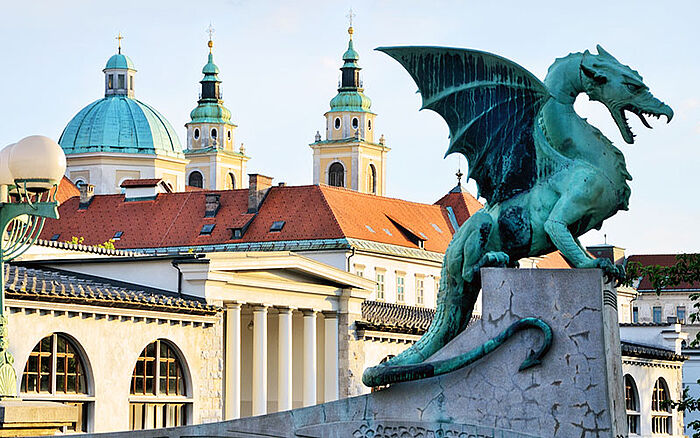
Though the UPC PMAC will have its seats in Ljubljana and Lisbon, actual dispute resolution proceedings will have far greater flexibility in terms of location.
These figures indicate that ADR is still relatively little used in patent disputes, likely influenced by the fact that these cases often have substantial value attached to them and may involve complex issues of law and technology. Resolution thus generally requires the determination of finely balanced questions about validity and infringement. Hence, parties may prefer to have a decision made by a judge in a public forum, where evidence can be fully heard and the resulting judgment can be read and, if necessary, deployed in other disputes.
The obverse of each of these factors only exacerbates the situation in that awareness of ADR among rights holders is not as strong as it could be, that few patent practitioners have experience of mediation or arbitration and that some parties are over-reluctant to engage in a process which, by dint of its closed-door nature, could be seen to deliver less jurisdictional bang for one's legal buck.
For the UPC PMAC to have any chance of changing these perceptions, to whatever degree, it is imperative that the body's Rules create an ADR venue that is convenient, expeditious, substantively effective and irresistible to professional word-of-mouth.
Rules on mediation
The draft Mediation Rules define it as "a structured process, however named or referred to, whereby two or more parties to a dispute attempt by themselves, on a voluntary basis, to reach an agreement on the settlement of their dispute with the assistance of a Mediator." They define a mediator as "a neutral, impartial and independent person appointed under the Rules who assists parties in reaching a dispute resolution in the context of Proceedings."
Article 15 of the Rules sets out the role of the mediator as follows: "The Mediator shall promote the settlement of the dispute between the parties in an orderly and appropriate manner having regard to the wishes of the parties. The Mediator shall listen and help the parties identify underlying causes of the conflict, the interests and the consequences of an absence of a settlement agreement. The Mediator may make proposals for the resolution of the dispute upon consensual wishes of the parties but shall have no authority to impose a settlement on the parties. The agreement and outcome of the Proceedings are decided by the parties."

Taking the ADR route not only avoids what are generally very long waits on court dockets, but proceedings are set up to reach their conclusion within a few months.
The Rules provide for support in the settlement of disputes relating to European patents, European patents with unitary effect and supplementary protection certificates for which the UPC is competent, as well as "related disputes." The scope of the service is potentially quite wide: The parties can agree that the mediation includes "any other disposable right or obligation factually or legally linked to the dispute." This suggests that the PMAC will have broad jurisdiction, as long as there is some connection to the UPC itself. Further clarity may be provided in the final version of the Rules.
Under the Rules, either party to a dispute at the UPC can request ADR. If the other side agrees, there will be an ADR information session, conducted by a neutral, which is free of charge for the parties and can be held by videoconference or other online tools. If the parties agree, the neutral may be appointed as mediator, allowing proceedings to start immediately.
A party wishing to initiate proceedings under a mediation agreement must send a request to the Centre and to the other party to the dispute with all relevant information. At this point, a non-refundable registration fee must be paid. The other party has 15 days to respond if it did not join in submitting the request.
The parties can agree to nominate one or more mediators from the PMAC's list or another mediator not named there. If none is selected, the PMAC will provide a shortlist of candidates for consideration. Where there is still no agreement, the PMAC will appoint a mediator after consulting the parties.
Proceedings will be conducted electronically or in person – at any location deemed appropriate. Mediators can meet or communicate with each party separately or together, and can share information with the opposite party unless it is stated as confidential. Mediators can also propose that issues in the dispute be resolved by other means, such as an expert determination, an early neutral evaluation or binding or non-binding arbitration.
Mediation is expected to be completed within three months. However, this period may be extended if the mediator and parties agree. Unless otherwise decided, the parties must pay an equal share of the costs of the mediator, the PMAC, translators and any experts taking part in the ADR.
Rules on arbitration
The draft procedures for arbitration are more detailed than those for mediation, reflecting the fact that arbitration is a more formal and structured process. Nevertheless, as before, the PMAC would be able to hear quite a wide range of UPC-linked matters under the Arbitration Rules currently proposed.

At the close of mediation, the parties are never compelled to take any action, since they are seeking a mutual agreement. In contrast, an arbitration award is generally legally binding.
The draft Rules on arbitration provide for an Expedited Procedure, which applies where the amount in dispute is less than €1 million or upon the parties' agreement. In this instance, there will be a sole arbitrator (unless provided otherwise in an arbitration agreement), limited exchanges between the parties, a single hearing and a time limit of six months, which may only be extended in exceptional circumstances.
Unlike in mediation, in arbitration, only the claimant must pay the administrative fee and the provisional advance on the arbitrator's costs. The respondent must answer within 30 days.
Disputes will be decided by either a single arbitrator or a panel of three, with the selection made by the parties or, where this fails, at the appointment of the PMAC. Where there is a panel of three and no presiding arbitrator arises by mutual assent, each party can nominate a single arbitrator, and the two appointees will then nominate a third, who will preside. There are mechanisms to challenge an arbitrator.
Hearings and meetings can be held at any appropriate location. They will comprise an initial case management conference, where a provisional timetable and preliminary issues will be addressed, followed by subsequent case management conferences.
The tribunal has wide-ranging powers regarding jurisdiction, evidence and interim measures. Parties can also request urgent interim measures, which would then be decided on by an emergency arbitrator. Regarding the hearings, the Rules state: "Unless otherwise agreed by the parties, all hearings shall be in camera and the Tribunal may impose further confidentiality regimes to hearings as it considers appropriate to protect the parties' and third party confidential information and/or trade secrets."
The Rules provide for the tribunal to hear (and refuse to hear) witnesses and to carry out examination and cross-examination. It may also appoint one or more independent experts, order document production and experiments.

Mediators and arbitrators on the PMAC panel are selected for their independence, impartiality and intimate knowledge of IP law and relevant commercial matters.
The tribunal may make final, interim, interlocutory, supplementary or partial awards, with reasons. The Rules set out that the award should normally be made within nine months of the date of the first procedural order.
FRAND disputes
Both sets of Rules include a section on disputes concerning fair, reasonable and non-discriminatory (FRAND) licensing. This speaks to commentary over the past few years from patent practitioners and judges that ADR may be appropriate for standard-essential patents (SEPs). There have been many clashes over SEPs and FRAND issues before courts in various countries, raising highly involved questions about, among other things, jurisdiction, evidence and the ability of judges to make licensing determinations and assess royalties.
The FRAND sections in both of the draft Rules are broadly similar and set out that the mediation or arbitration of these cases may cover issues including the SEPs in dispute, any essentiality assessment, the determination of selected licensing terms and conditions, the determination of the scope of the royalty base and range and the method for calculating a FRAND royalty rate.
They also recognize that FRAND quarrels "may require a higher level of confidentiality protection," and provide for the continuation of parallel proceedings that are not subject to mediation / arbitration.
Benefits and future of ADR
ADR can offer notable advantages to parties in patent disputes, including lower costs, quicker resolution, greater control over proceedings and confidentiality. No small amount of work has already gone into setting up the UPC PMAC and providing a framework for its operation, which indicates that it could serve an important function in patent cases that have a link to the UPC.
However, there remains a hesitancy to turn to mediation and arbitration in patent disputes, and this will have to be overcome if the PMAC is to be successful. It is to be hoped that the final versions of the Rules provide greater clarity on topics such as the scope of disputes and the appointment of neutrals. Moreover, the list of experts needs to command confidence and respect in order to be trusted by would-be users.
If these concerns are addressed, then parties and their advisers should start to consider whether ADR is appropriate in patent cases, and if so, take steps to prepare.
A version of this article first appeared in The Patent Lawyer Annual 2026.
Filed in

New methods of using artificial intelligence (AI) are helping to get inventions from the research lab to the marketplace more efficiently.
University IP and the role of AI in technology transfer
New methods of using artificial intelligence (AI) are helping to get inventions from the research lab to the marketplace more efficiently.

Invent horizon: imagining the patent system in 2050
Reflecting on past developments and recent trends to conceptualize the possible course of Intellectual Property over the next 25 years.

What is a utility patent? Your complete guide to protection in the United States
Learn what a utility patent is and how to apply for and maintain one.

Your go-to guide to patent renewals
Discover the ins and outs of maintaining patents, including strategies to manage budgets, due dates and ongoing value.

Get the updates in your inbox
Subscribe to get the latest news and updates.
No spam. We promise.